
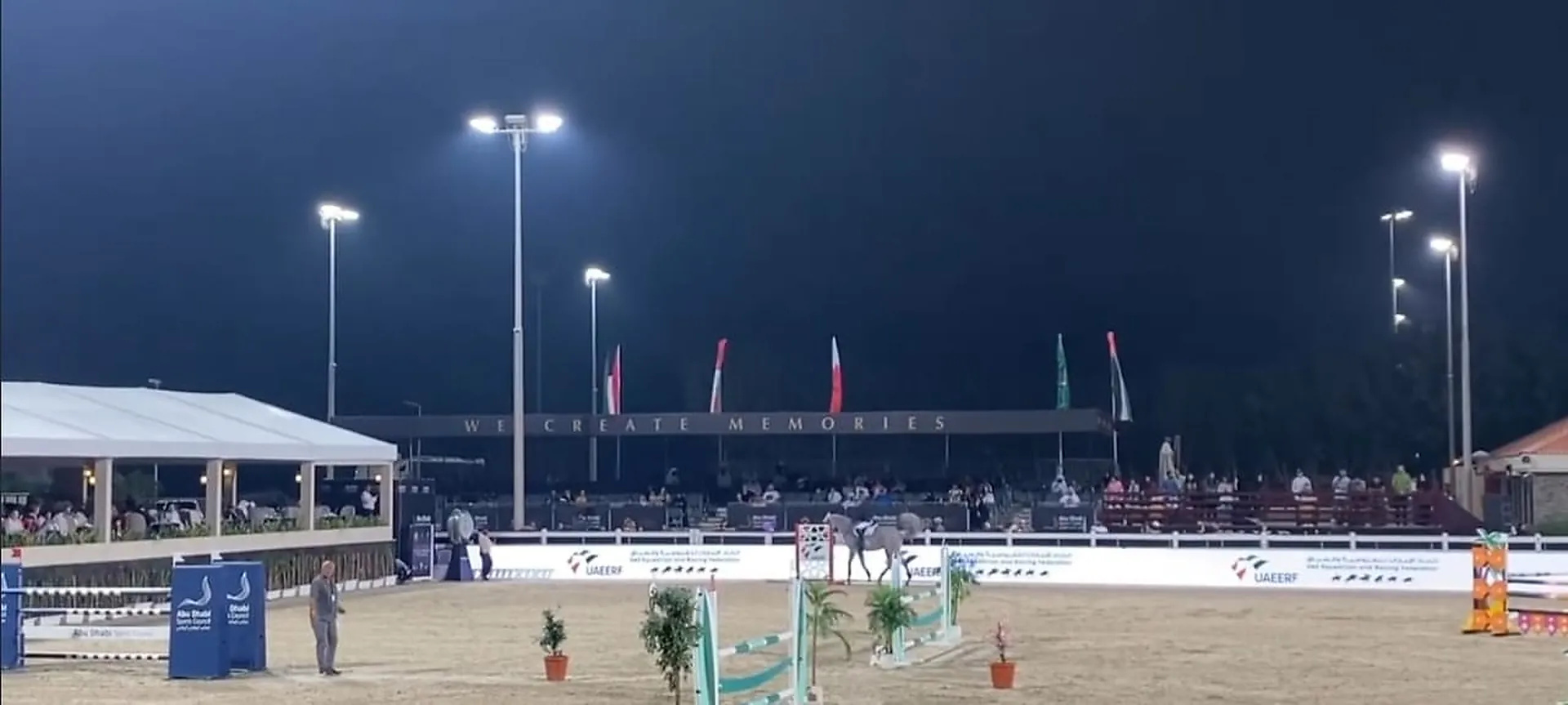
A horse cannot tell you it has been dazzled, which is why arena lighting is judged from the saddle rather than from the drawing.
The surface
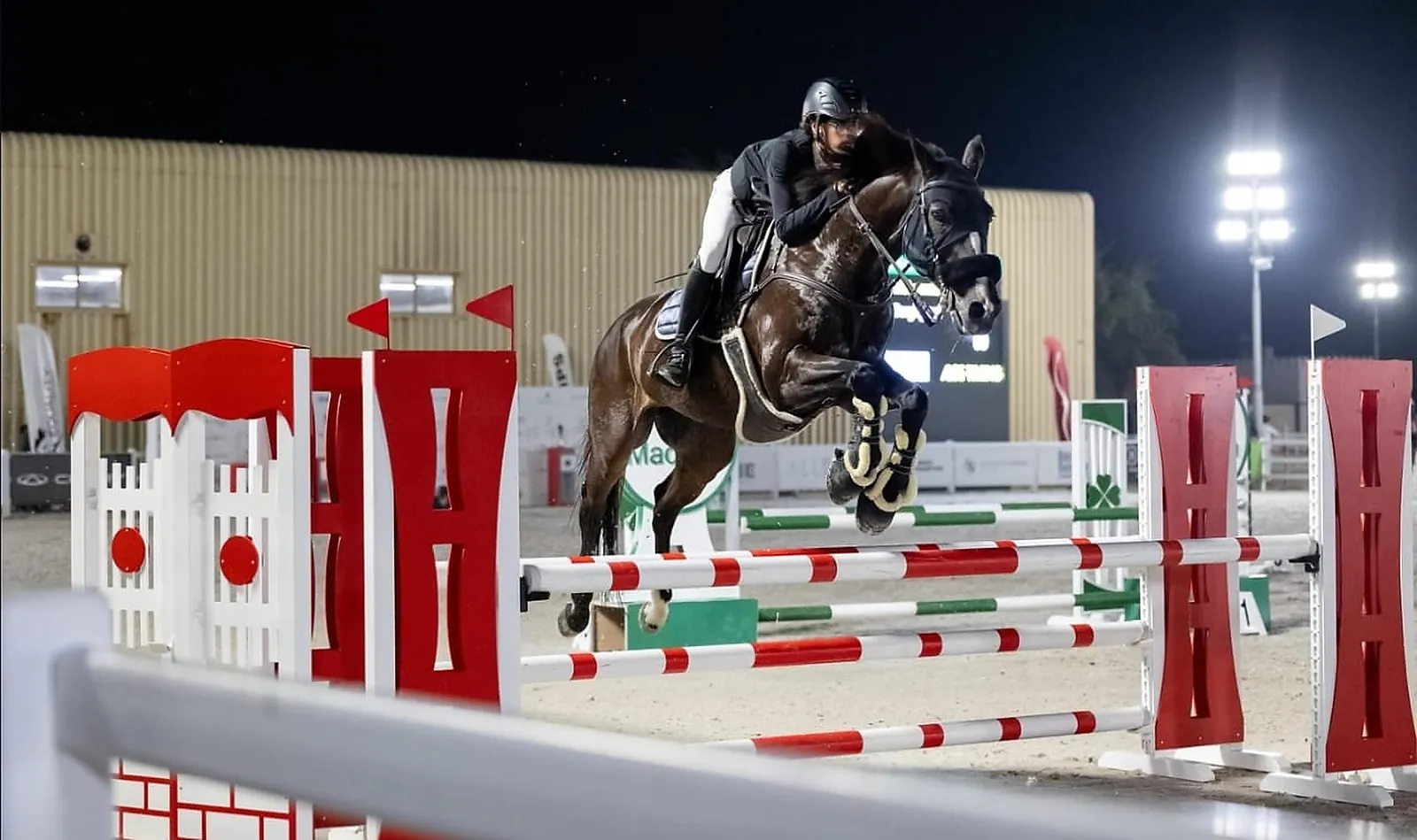
Sand is the difficulty: an arena floor is a low-reflectance, uneven surface that has to be read accurately at speed. The horse reads it, and so does a rider judging a take-off point; both are looking along the surface, not down at it.
That rules out the obvious solution. A few powerful floods will light a sand arena to a respectable average and still be unusable, because the average says nothing about the dark patch on the approach to fence four. Uniformity across the surface matters more than the headline number.
The outdoor arena, for which AL SHOLA ALMODEA designed, supplied and installed the scheme, is lit from masts around the perimeter, aimed so the light crosses the surface from several directions at once. Overlapping beams from opposing masts fill the shadow a single direction leaves behind every obstacle.
Two arenas
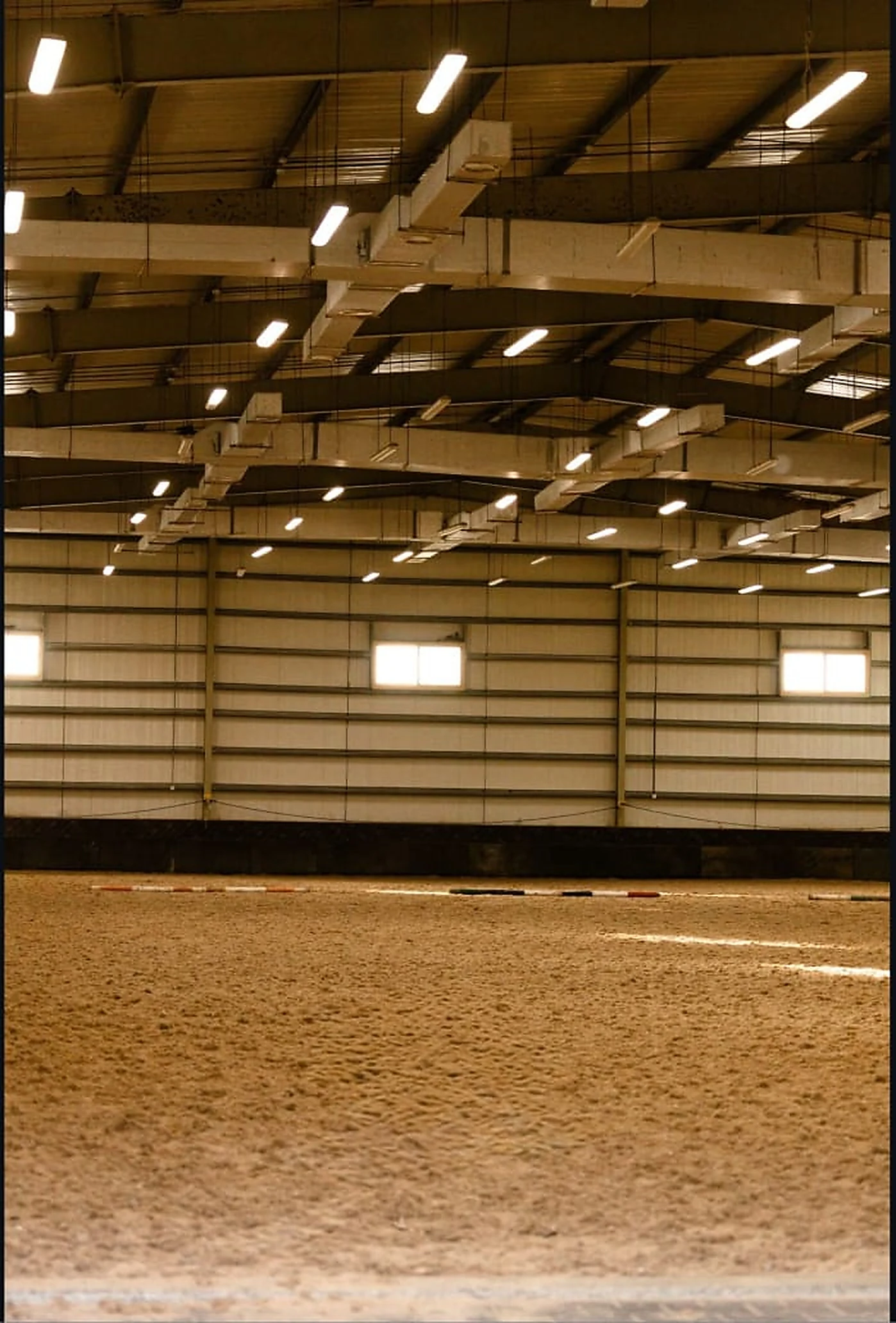
Indoors the constraint inverts. There is no spill and no wind load, but there is a low roof, a reflective steel structure, and a rider whose eyeline passes directly under every fitting.
Linear fittings run between the trusses rather than below them. That keeps the source above the plane a rider looks along and lets the structure carry the cable. The sand softens the rest.
Mounting
An arena mast is a structure before it is a lighting position, carrying wind load with an eccentric mass at the top. It needs a foundation designed for overturning, not bearing, in fifty-degree heat with sand blowing through it.
Aiming is done once and locked. Every luminaire is set with the arena in use below it, which means night work with somebody riding. The brackets are then marked and torqued so a maintenance visit cannot quietly undo it: a fitting rotated ten degrees puts a bright band where a take-off used to be.
Access decides the maintenance regime. Without raise-and-lower gear every lamp change is a crane visit, so changes get deferred until several have failed and the uniformity has gone. Lowering gear specified at the outset is the difference between a scheme that stays lit and one that degrades.
Ingress rating is chosen for dust, not rain. A gasket specified for a temperate climate will pass its test and still let fine sand through over a couple of seasons, and sand inside an optic is not recoverable by cleaning the lens.
Arena lighting
Flood optics are difficult to judge from a photometric file. Our showroom in Industrial Area 7, Sharjah, has fittings lit and running. We design, supply and install arena and sports lighting across all seven emirates, with a 5-year warranty on the fittings we supply. Call +971 6 572 3204 or message us on WhatsApp. More of our work in the emirate is on the Abu Dhabi lighting page, and the rest of this category is on the sport club projects page.