
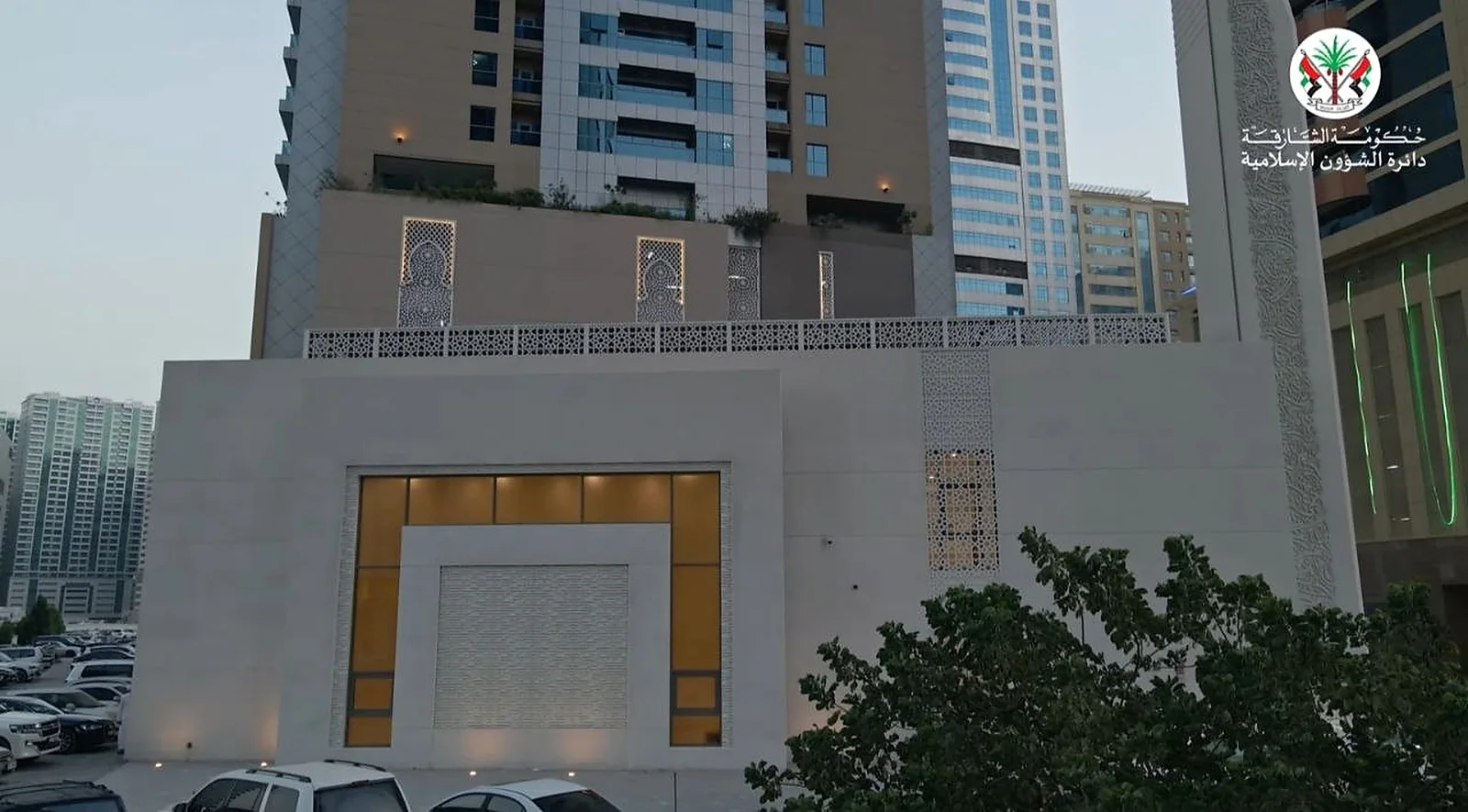
A mosque on a residential block in Sharjah, with apartment towers looking down into it from three sides.
The setting
The mosque is low and the buildings around it are not. Residential towers stand on three sides, close enough that their balconies look down onto its roof, and that settles the scheme before the architecture is considered.
Every upward-facing fitting on this site points at somebody’s window. So the beams are narrow, the mounting is low, and the light is kept on the stone. An uplight that spills past the parapet is a neighbour’s bedroom.
Restraint
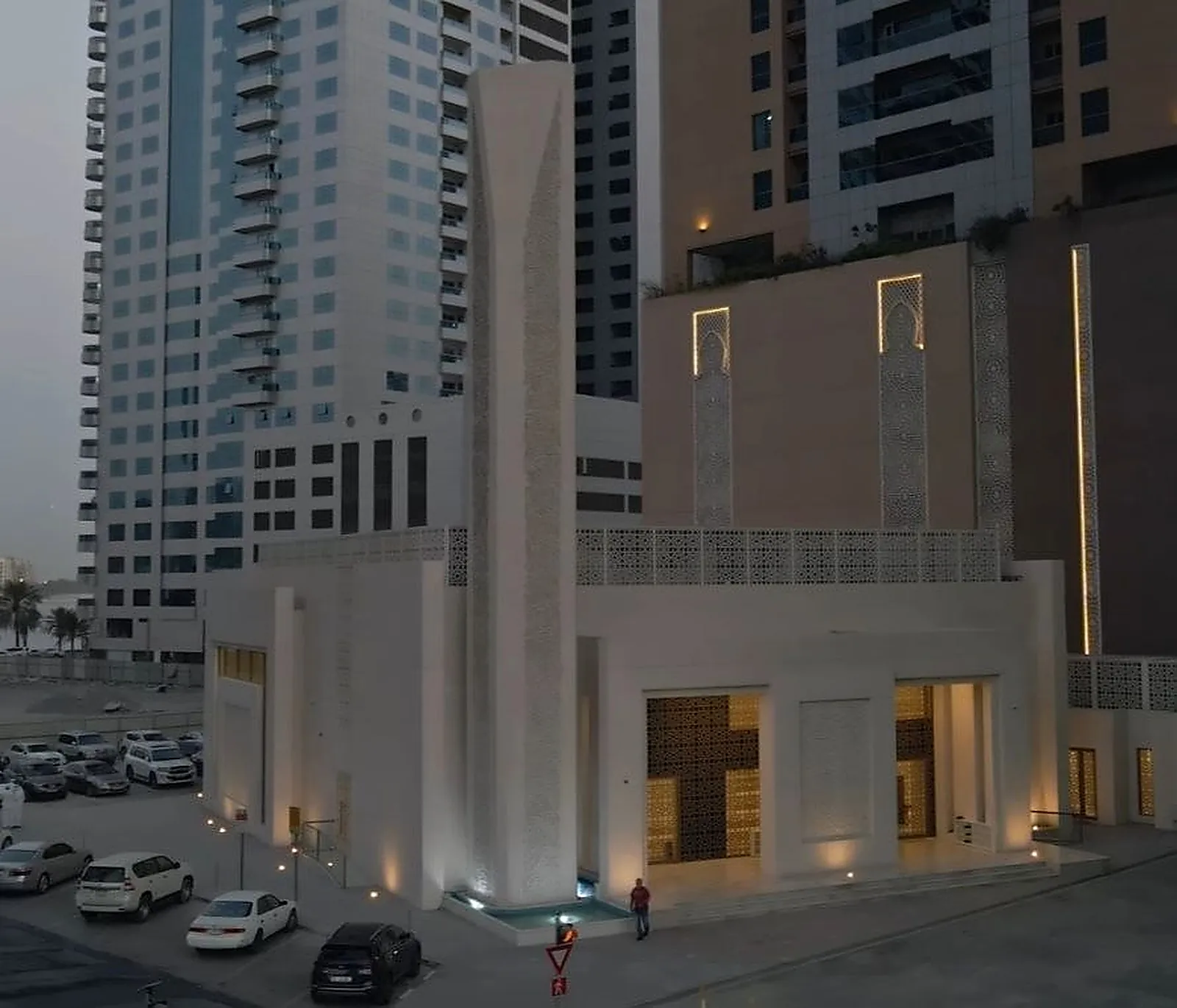
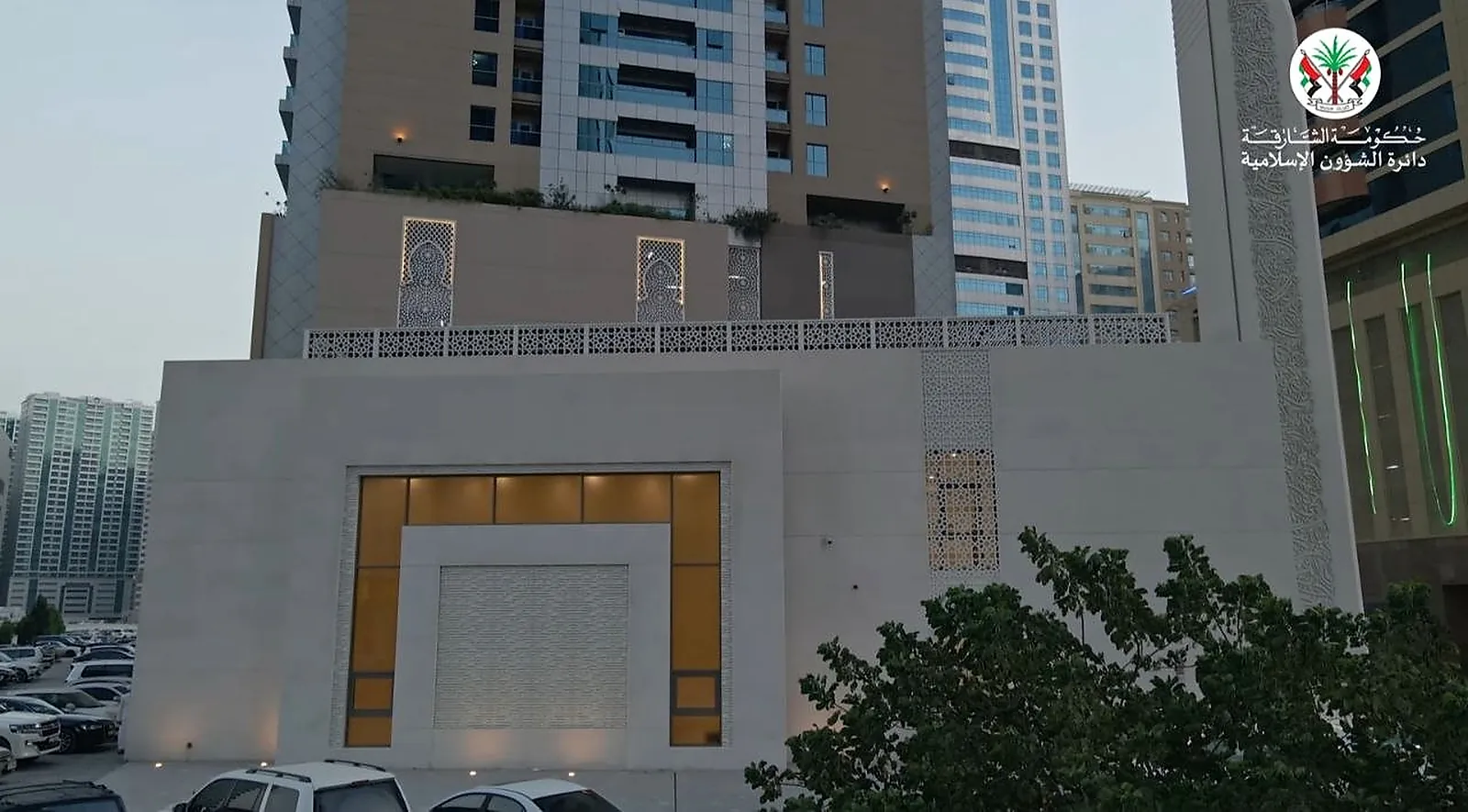
The architecture carries perforated geometric screens along the parapet, tall slotted openings, and a recessed portal at the entrance. Those are the features. The work is to make them legible after sunset and to stop there.
Screens are lit from behind so the pattern reads as pattern. Washed from the front, the same screen flattens into a panel with texture on it. The stone is grazed from close to its base at a shallow angle, letting the surface show its own relief.
The entrance is given more. It is a recessed portal, and lighting the reveal rather than the face turns the opening into a soft frame that can be found from the street without a sign.
Warm white throughout, one colour temperature, nothing that changes and nothing that moves. On a building like this restraint is not a stylistic preference. It is the brief.
The prayer hall
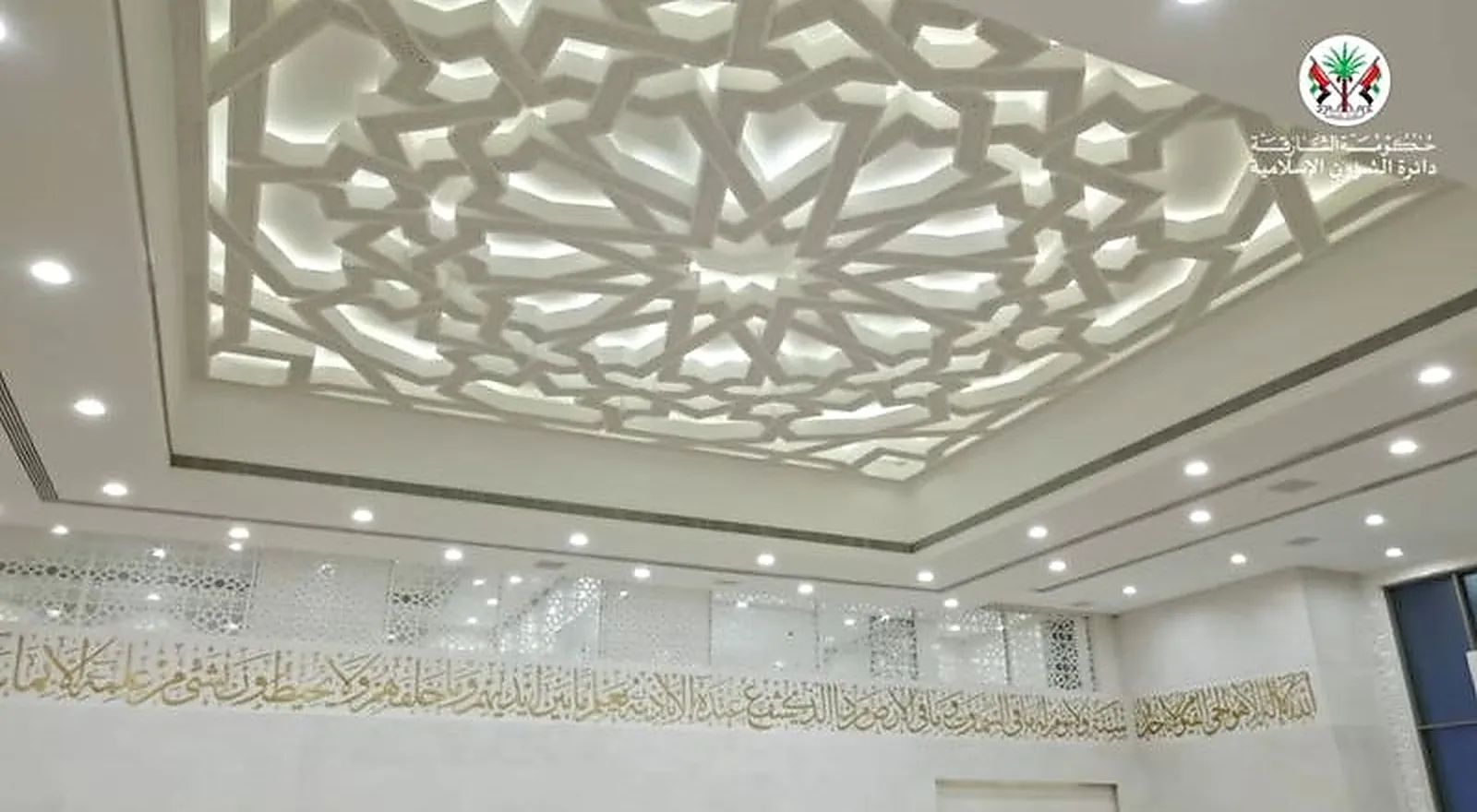
Inside, the ceiling matters more than it would anywhere else. A worshipper stands, bows, goes down into sujood and rises again, so the ceiling passes through the field of view several times in a few minutes and is looked at directly from the floor.
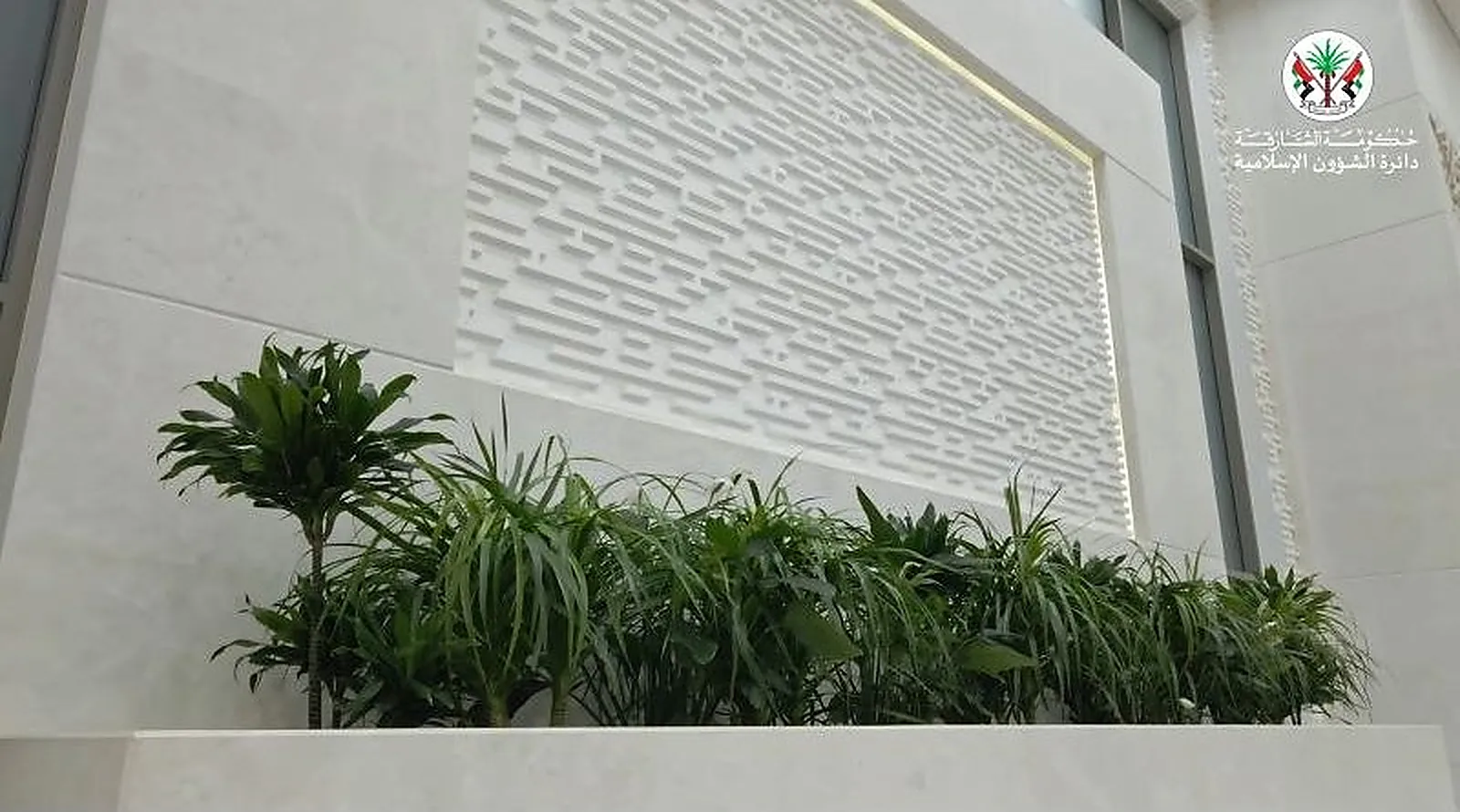
The scheme puts the two layers in different planes. The decorative layer is a carved geometric panel set deep inside a coffer and lit from behind, so the pattern is visible but the source is not. The working light sits outside the coffer, in the flat soffit, aimed at the carpet.
Keeping them apart is the point. Downlights inside the coffer would put bright points in the same field of view as the pattern, and the pattern would lose. Moved to the flat soffit, they light the floor and leave the coffer one job.
The calligraphic frieze below is treated as a band, not a row of spots. Text lit unevenly reads as a series of bright patches, and the eye stops at each one instead of running along the line.
Prayer times
The building is in use five times a day and two of those are in darkness for most of the year. Fajr and isha shift week by week with the prayer calendar, so a fixed timeclock is wrong for nearly all of it, leaving the building dark when people arrive and lit when nobody is there.
Switching to the prayer calendar, with a photocell outside, is the control decision that decides whether the scheme is useful or merely present. It is the cheapest thing to get right at the start and among the more awkward to change later.
AL SHOLA ALMODEA designed, supplied and installed the architectural lighting at Al Rajaa Mosque, inside and out.
Mosque lighting
Evening use peaks in Ramadan, and that is the worst month to discover that the timeclock does not follow the prayer calendar. Design, supply and installation across all seven emirates, with a 5-year warranty on the fittings we supply. Call +971 6 572 3204 or message us on WhatsApp. More of our work in the emirate is on the Sharjah lighting page, and the rest of this category is on the mosque lighting projects page.