
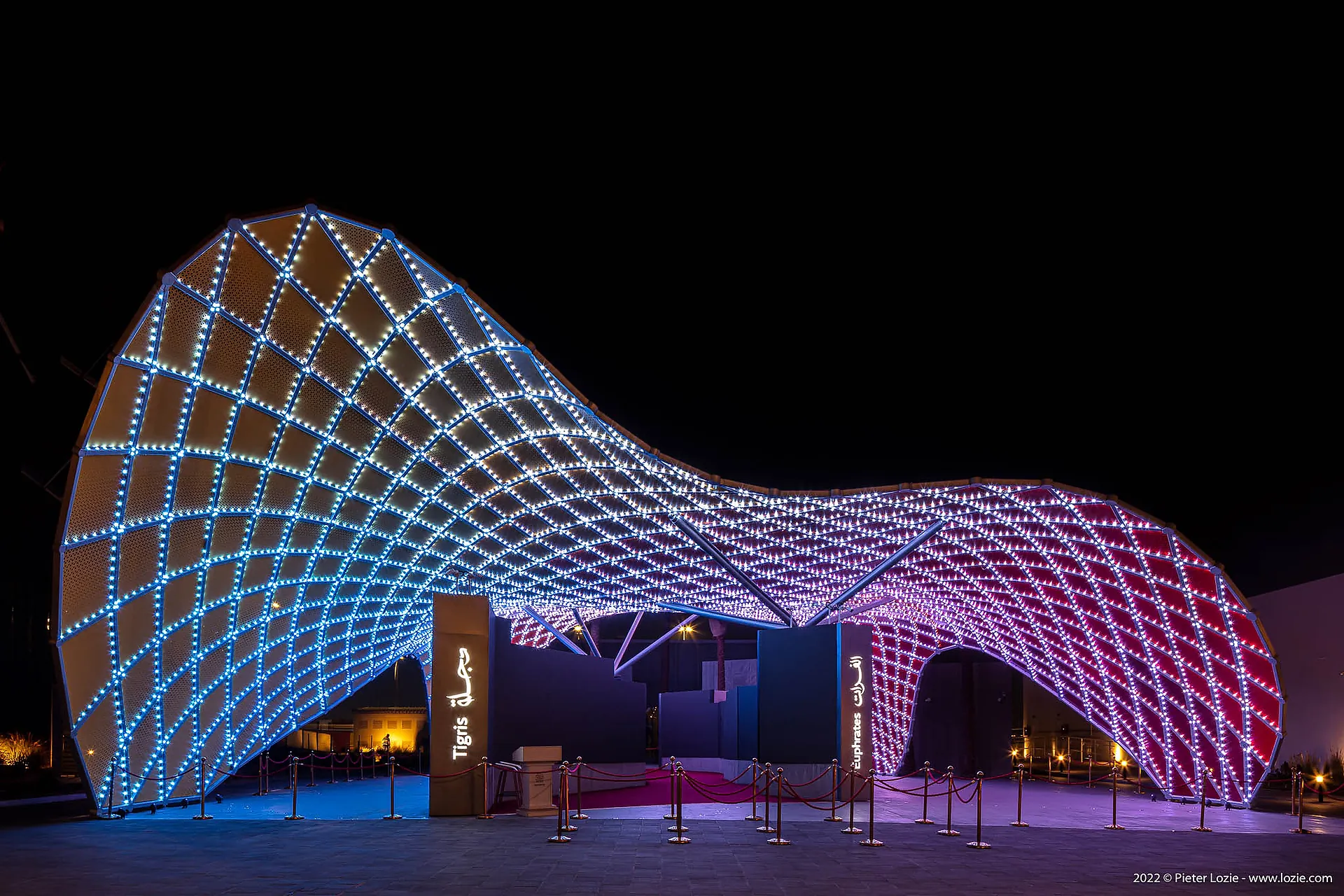
A doubly curved timber lattice with no flat surface anywhere on it, and a scheme that had to change colour across the whole of it at once.
The structure
AL SHOLA ALMODEA designed, supplied and installed the lighting for the Iraq Pavilion at Expo 2020 Dubai. The pavilion is a timber gridshell, a lattice of slender members curving in two directions at once. It rises and falls across the site, so no two cells are the same shape and no part of it is flat.
Every conventional facade technique assumes a surface. Grazing needs something to graze along; washing needs something to wash. A gridshell has neither. It is mostly air, and what you light is the frame around the holes.
What works is lighting the members themselves, so the structure reads as a drawn net against the sky. Because the lattice is open, light passes through it, and the pavilion is seen from both sides at once: lit from within on one flank, silhouetted on the other, by the same fittings.
Colour
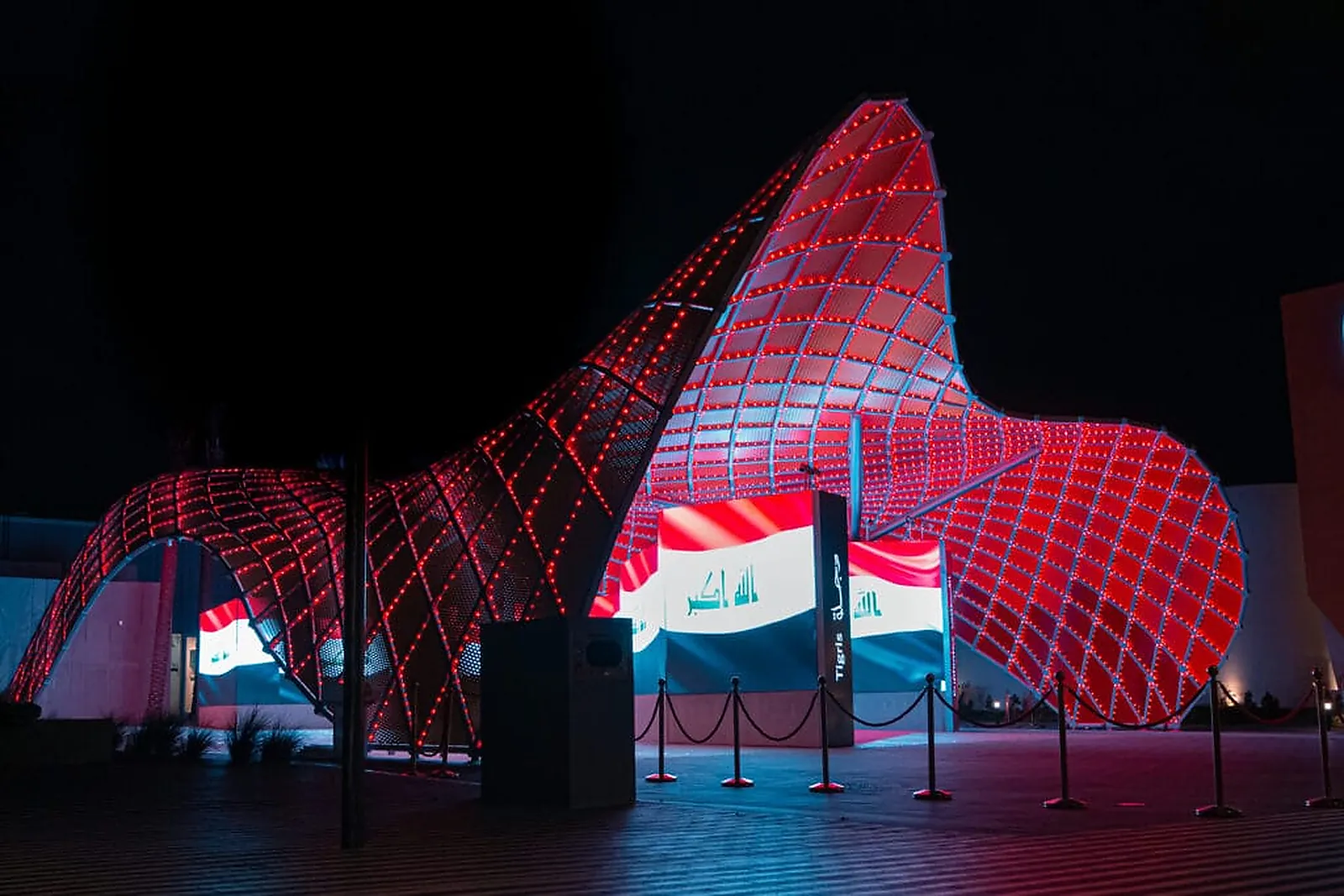
An expo pavilion is a flag before it is a building. The scheme runs the full colour range and holds the national palette when it matters, so the shell reads red, white and black on one evening and something else on another.
Colour across a curved lattice is harder than across a flat facade. On a flat wall every fitting sits the same distance from the viewer and one setting looks even. On a shell the nearest members are metres closer than the far ones, so the same output reads brighter at the near edge and the eye takes that as a colour shift.
Commissioning
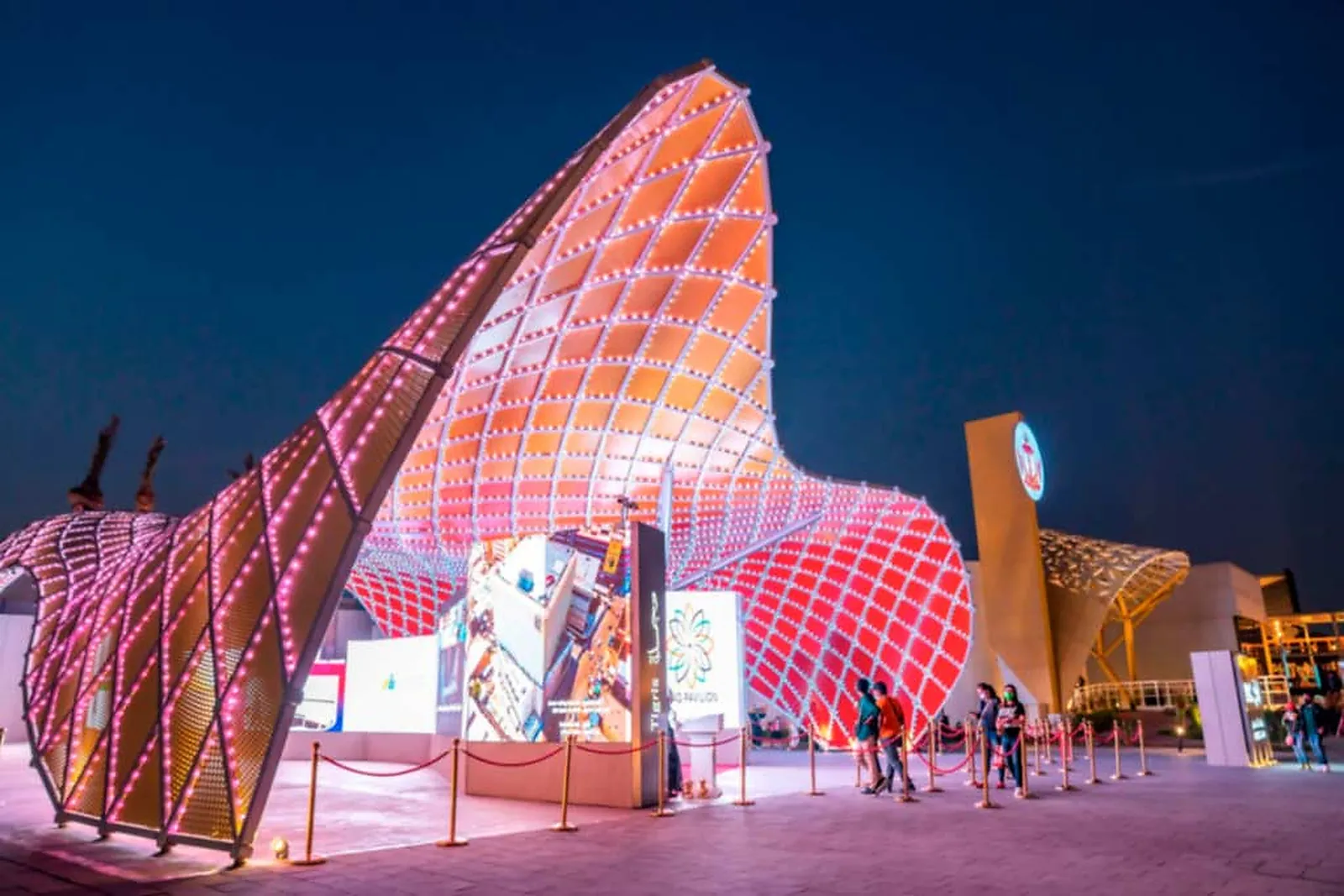
Addressable lighting is normally commissioned by address: fitting one is here, fitting two is next to it, and the controller steps along the row. A gridshell has no rows. The members run in two interlocking directions, and the sequence a technician follows while installing is not the sequence the eye follows.
So the address list and the position on the shell are recorded side by side during installation, node by node, while the access equipment is still under the structure. Reconstructing it afterwards means a very long night with two radios or a scaffold going back up.
Programme governs an expo job. Site access is controlled, working windows are shared with every other trade, and the opening date does not move. Anything needing a return visit after handover cannot happen, so commissioning finishes before the hoarding comes down.
Public access changes the detail specification. A pavilion is walked under, leant on and photographed by tens of thousands of people a day, so low-level fixings are tamper resistant and cable runs inside the members, not clipped to their faces.
Exhibition lighting
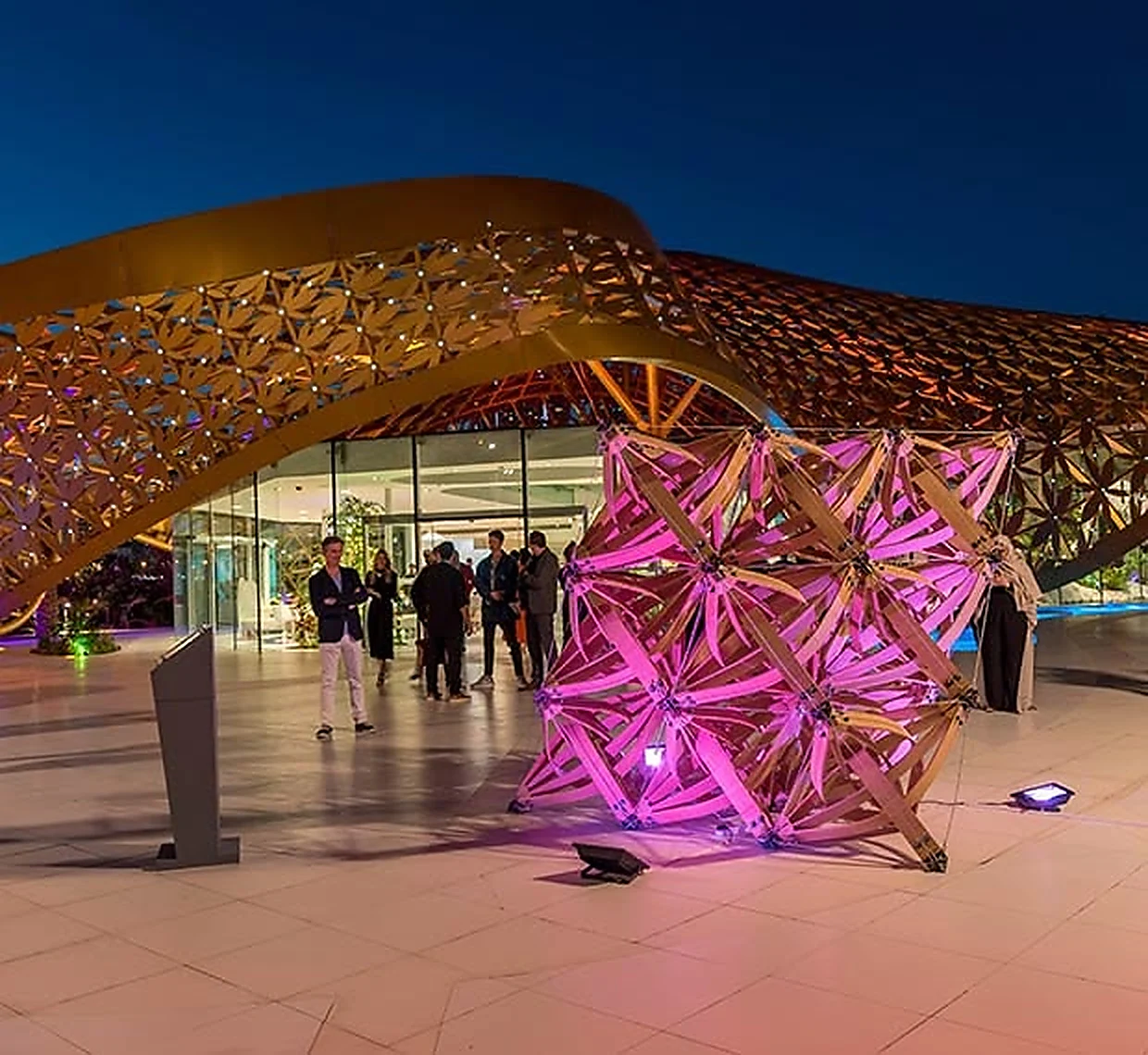
Curved, open and irregular structures are specified from a model rather than an elevation, and we would rather see the geometry early than price it late. Design, supply and installation across all seven emirates, with a 5-year warranty on the fittings we supply. Call +971 6 572 3204 or message us on WhatsApp. More of our work in the emirate is on the Dubai lighting page, and the rest of this category is on the showroom and exhibition projects page.